
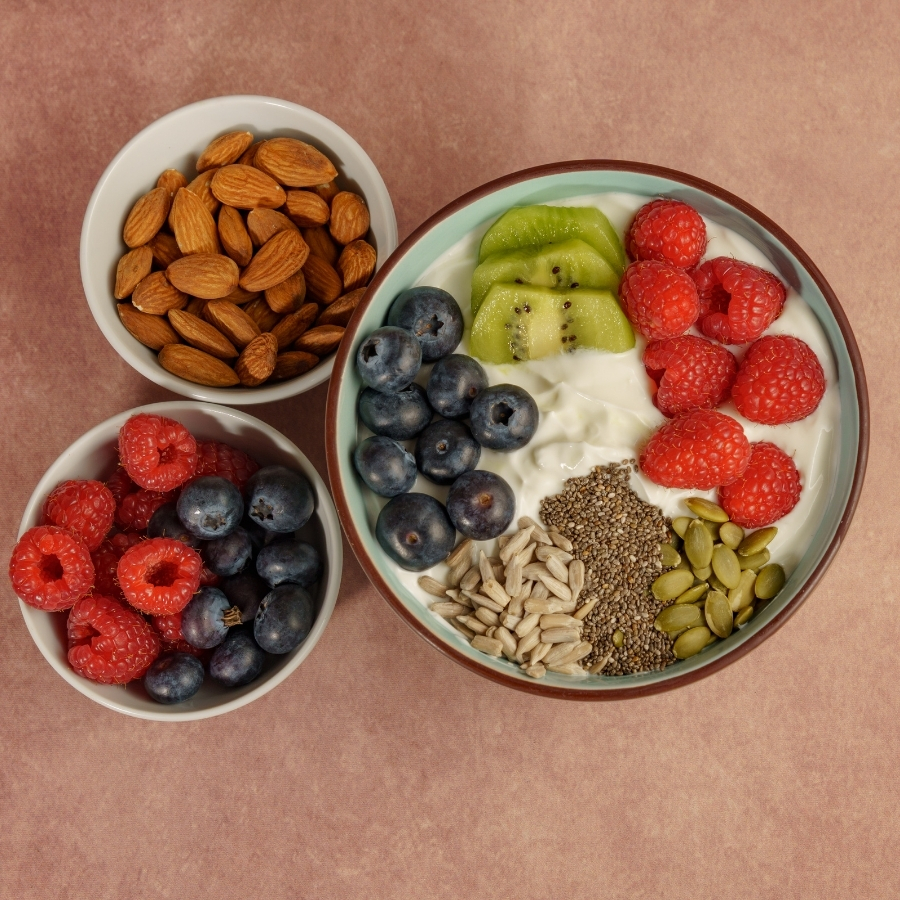
Dr. William Li is a physician, scientist, and New York Times bestselling author, that is best known for a refreshingly simple idea that we can definitely get behind. Instead of handing you a long list of foods to cut out, Dr. Li wants you to think about the foods you should add IN to your diet. He is the author of Eat to Beat Disease and Eat to Beat Your Diet, and if you want to to just that you should definitely pay attention to which foods he recommends you add IN.
So if you have ever felt overwhelmed by rules about what not to eat, this is the conversation for you. The whole premise behind the Dr. William Li diet is that the things you already enjoy might be doing more for you than you think.
When Dr. Li joined Lauryn and Michael on The Bossticks, he walked through food after food, drink after drink, and explained exactly why each one earns a spot on your plate. You’re going to absolutely love this, Michael is now fully on the kiwi train (more on that below), and he spent a good chunk of the episode asking the questions a total beginner would actually ask.
This post breaks down every food and drink Dr. Li recommends, in his own words, with the research behind it where we could find it. Here is the full breakdown of what Dr, William Li eats, plus his produce washing method, a 20-minute dinner, and his top three tips to start tomorrow.
What Foods Does Dr. William Li Recommend?
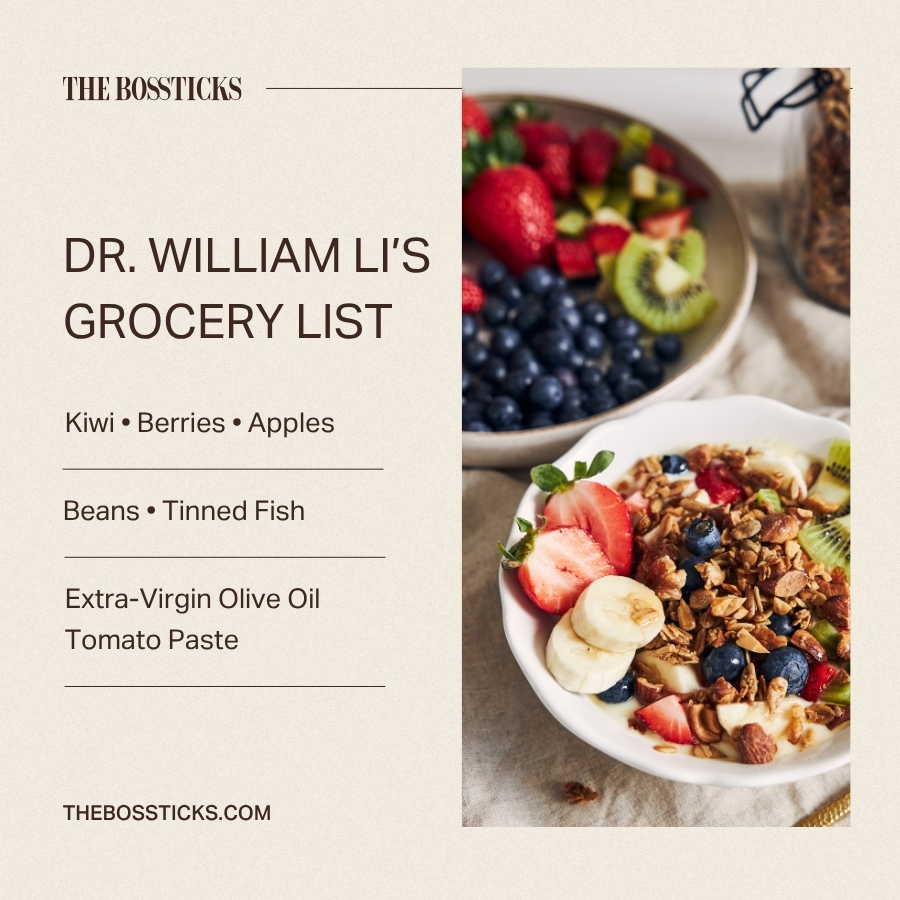
The short answer to what foods Dr. William Li recommends is a lineup you can find at any grocery store: kiwi, strawberries, apples with the skin, blueberries, green tea, black tea, coffee, water, beans, tinned fish like sardines, extra virgin olive oil, and tomato paste. None of it is exotic, and most of it is probably already on your shopping list. Below we’re going to dive deeper on the why behind each one, along with what Dr. Li specifically said it does for your body.
Kiwi
Kiwi is the food Dr. Li is maybe most famous for, and it is the one that hooked Michael.
Kiwi is a great source of vitamin C, which Dr. Li described as a natural antioxidant that reduces the chances of a DNA mistake, and it also delivers dietary fiber.
That fiber is the real magic for gut health.
The fiber feeds your healthy gut bacteria, and when your gut bacteria are well fed, they are stronger and their overall ecosystem is better.
As Dr. Li explained it, those happy bacteria then pay you back.
They make their own substances that lower inflammation and boost your immune system so it can spot runaway microscopic cancer cells and wipe them out.
His advice was to make it your morning go to and that starting your day with kiwi is super beneficial for your gut and immune system. You can eat just the inside, or pro tip:toss a whole kiwi into a blender with other things, the skin disappears into the background and doubles down on the fiber you get.
Strawberries
Dr. Li states very clearly that strawberries are good for your overall health. The compound in strawberries he specifically points to is ellagic acid.
Ellagic acid is what makes strawberries tart, and Dr. Li says it gives you healthier circulation and can also help cut off the blood supply feeding cancer cells. But there is more! Strawberries also offer a brain benefit too. Eating strawberries has been shown to lower the risk of depression and improve memory, which is why brain researchers have been studying what fruits can do for brain health.
Apples (With the Skin)
Apples are a two-for-one, because the flesh and the skin each bring something different to the wellness table.
The flesh inside of apples has chlorogenic acid, which Dr. Li said is good for metabolism and lowers inflammation, while the skin has something called ursolic acid. And the skin is where it gets really interesting. Dr. Li says ursolic acid helps your body regenerate and can actually help pull out some of your own stem cells.
He is also realistic about pesticides on apples here. In a University of Massachusetts study he referenced, researchers found that rinsing could not remove everything.
About 20% of one applied pesticide penetrated into the apples and could not be washed away with the baking soda solution tested. His takeaway was not to skip apples, but to wash them well and buy organic when you can. If you want to go deeper on reducing your everyday exposure to this kind of thing, we broke down a natural heavy metal detox in a separate post.
Blueberries and Other Berries
Berries are a staple for Dr. Li, however he says that many foods we think of as berries are not real berries at all, and a strawberry is technically not a real berry, nor is a blackberry or a raspberry.
So what is truly a berry? A blueberry is a true berry, and a banana is technically a berry too.
Either way, his point stands: he loves blueberries, strawberries, blackberries, and raspberries, and encourages you to eat more of them.
Green Tea
Green tea is a standout for circulation, and Dr. Li calls it something that is universally good for your blood vessels over a lifetime. The specific compound you want to know is EGCG.
EGCG is a polyphenol that cuts off the blood supply feeding cancer cells, lowers inflammation, and contributes to lowering your blood pressure, so you feel calmer after a cup.
However not all green tea is created equal. So he recommends you opt for loose leaf tea with a little filter or tea ball. Let it cool a bit before drinking, and skip the add-ins. His advice was to drink it plain, with no dairy or sugar.
If you prefer cold green tea, you’re also in the clear. Dr. Li says that the science shows cold green tea is perfectly fine.
Black Tea
Green tea gets the spotlight, but Dr. Li does not want you to sleep on black tea either.
He points to studies done in Italy on black tea that found drinking black tea can also mobilize your stem cells for healing.
As he put it, you do not need to go somewhere for a stem cell injection when English breakfast or Irish tea can be helpful on its own..
Coffee
Good news for coffee drinkers, because Dr. Li pushes back on the narrative that coffee is somehow bad for us.
Coffee contains chlorogenic acid, which he said is anti-inflammatory and turns on your metabolism to help burn down excess body fat.
And that old fear about your heart? He said the idea that coffee causes heart disease is not true, and for the most part coffee drinkers actually have a lower risk of cardiovascular disease.
His one caveat: some people are very sensitive to caffeine, so you have to be careful and know your own body.
Water
Water is the foundation of what Dr. Li calls the holy trinity of beverages. He says you really can’t go wrong with water, tea, and coffee as the holy trinity, with water needed for hydration.
And proper hydration is not a small thing. If you want your immune system to work properly and want to grow your muscles, you need to be properly hydrated.
He does suggest ideally drinking out of a glass bottle to reduce your exposure to microplastics, which makes a lot of sense.
For your home, he leaned toward getting a home filter, like reverse osmosis, to make sure you are drinking really clean water.
Beans
Beans are an easy, inexpensive win that Dr. Li flags as being particularly good for your metabolism and a great source of plant-based dietary fiber. Whether dried or canned, they are one of those pantry staples that quietly supports your gut health.
Tinned Fish (Sardines, Mackerel, and Anchovies)
Tinned fish has been having a moment lately, and Dr. Lee says they might be the most underrated pick on the list. He made a real case for them on the show and admitted that as a kid, canned fish looked and smelled like cat food to him, so the aversion is common. But his view changed and he now tries to eat them regularly.
Sardines specifically deliver healthy omega-3 fatty acids that are good for brain, heart, and immune health, and because you eat the little bones, you also get calcium without a big chunky supplement. Not bad for a shelf-stable can.
Extra Virgin Olive Oil
Extra virgin olive oil is a pantry staple for Dr. Li. It’s definitely worth keeping on hand, and most grocery stores carry plenty of options. Just make sure the label says extra virgin. You can use extra virgin olive oil for cooking, salad dressings, or as a topper for avocado or bread flavorings. It’s so versatile and super healthy.
Tomato Paste
Tomato paste made the list thanks to a study Dr. Li, he says that according to research out of Spain where people ate tomato paste daily and had their brains scanned. In the study, the tomato paste group showed improved brain scans and better interconnection of the part of the brain that helps memory, compared to people who did not eat it..
Pantry Staples From the Middle Aisles
AS said above, Dr. Li is all about shopping the outer perimeter of the grocery store first for whole unprocessed foods, then, you should go into the center on a treasure hunt, because there are a lot of really healthy things in the middle aisles if you know what to look for.
A few of his favorites beyond beans and olive oil:
- dried seaweed
- dried mushrooms
- cacao for baking.
If you want another expert’s framework for eating this way, our breakdown of the Gary Brecka diet pairs well with this one.
Meat in Moderation
Dr. Li is not anti-meat, and he is clear that he is not a vegan or vegetarian either. He personally eats mostly a plant-based diet but will eat fish, seafood, and chicken, and occasionally pork or beef.
His guidance comes down to quality and moderation. His advice is that if you are going to eat meat, eat the highest quality meat you can, and do not go for the cheap stuff and eat a ton of it all the time.
[Editor: use present tense for describing guest opinions, past tense makes it feel like a recap of the episode when we’re really just trying to communicate the takeaways and value using the episode as source material]
He also pointed to how the Mediterranean and much of Asia do it. Rather than a big thick steak on a plate, meat is often mixed in with vegetables and shared, integrated into the diet in moderation. So don’t worry if you enjoy meat, eat it, but get the best quality you can and do not do it too often.
Dr. William Li’s 20-Minute Sardine Pasta
One of the best moments in the episode was when Dr. Li described his go-to late-night pantry dinner, a traditional Sicilian-style dish he said he once made on the Rachael Ray show. He describes the dish as a humble, accessible recipe, originally a dish for people who were not reaching for elite seafood distributors, which is exactly his point about eating well on a budget.
Here is roughly how he described making it in under 20 minutes:
- Boil some whole wheat pasta.
- Once the pasta is cooked, mix in tinned mackerel or sardines with a little extra virgin olive oil.
- Throw some capers on there and squeeze a little lemon.
- Toast some panko breadcrumbs with a little garlic until crunchy and brown, then pour them right on top.
That is it!
The result is a crunchy, lemony, capery sardine pasta he says takes less than 20 minutes.
How Dr. William Li Washes His Produce
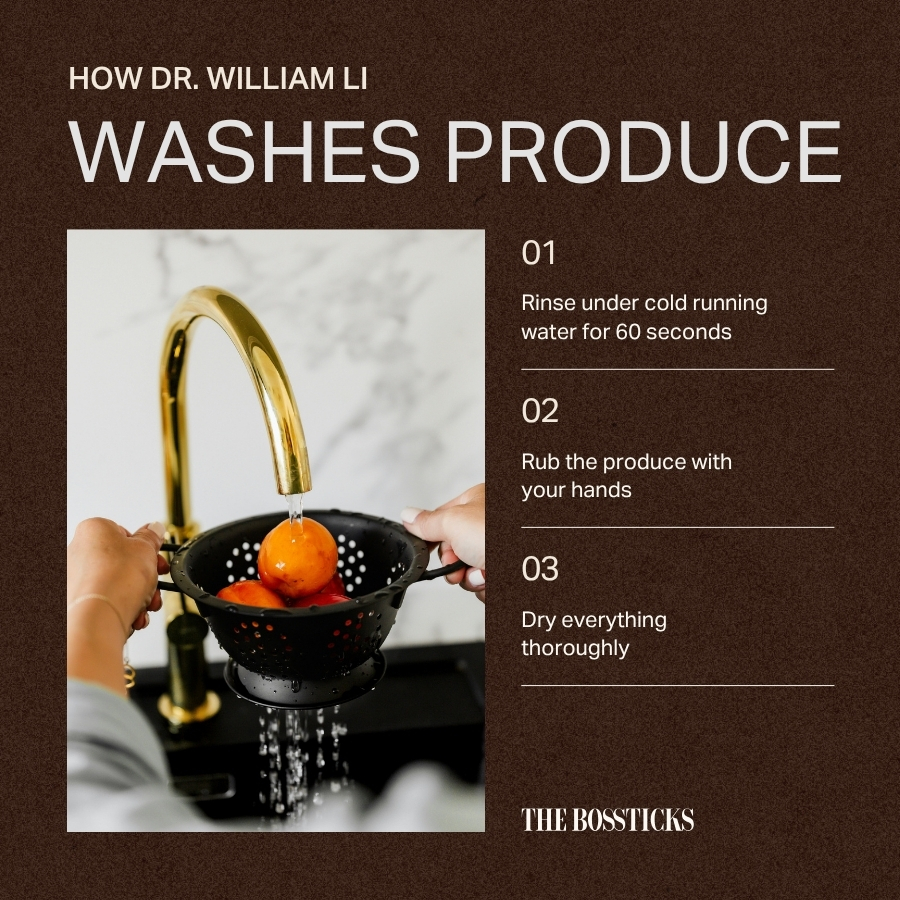
If you only steal one habit from this episode, make it this one. Dr. Li’s produce-washing method is almost comically simple, and it’s meant to be because let’s face it, if its not simple we won’t do it regularly. And consistency is the key to improving your health overall.
- Run everything from the produce section or farmers market under cold running water for about 60 seconds.
- The trick is to use a big metal mixing bowl, the kind you would make cookies or dough in, let the cold water overflow it for about 60 seconds.
- Rub the produce with your hands.
- Dry the produce well, patting it dry before you cook with it.
He likes doing it in a bowl rather than over the tap because you can actually see the scum that came off the food floating in the water, which builds your confidence that you cleaned it.
For an even more effective method, you can try soaking your produce in baking soda, but only if you don’t mind taking the extra time because sometimes that extra effort backfires. His worry is that if he had to do an extra soak, people might bring home less produce or forget to wash it altogether. The most important thing is to “take on simple habits that require as little effort as possible.”
Washing your produce is part of the bigger picture of lowering your everyday exposure to pesticides and grime, which ties into our guide on a natural heavy metal detox and simple daily swaps.
Are you going to eat more of the foods Dr. William Li Recommends?
We personally think that working these foods into your diet (washed the Dr. Li way) makes a lot of sense and is actually easier than you think. The first step is knowing which foods you actually like, that are on his recommended list, that you eat naturally, this will build confidence that the things you actually enjoy are good for you. Shop the inner aisles before you head into the center, eat berries, drink some green (loose leaf) tea, meat in moderation, and generally eat like the mediterranean do and you’ll be okay.
His personal mantra is that you should love your food to love your health, and his books Eat to Beat Disease and Eat to Beat Your Diet are built around inclusion rather than cutting things out.
If you want the full picture on his background, research, and credentials, read our profile on who is Dr. William Li for more.
Lauryn and Michael are not doctors, and neither are we. This post shares what Dr. Li discussed on the show plus a little verified research, not medical advice. For anything specific to your health, talk to your own doctor.
Watch the full conversation with Dr. William Li on the The Bossticks YouTube channel, and subscribe so you never miss an episode.
The information in this post is for general educational and wellness purposes only and is not medical advice. Lauryn and Michael are not doctors or dietitians. Always consult your own physician before making changes to your diet or health routine.