
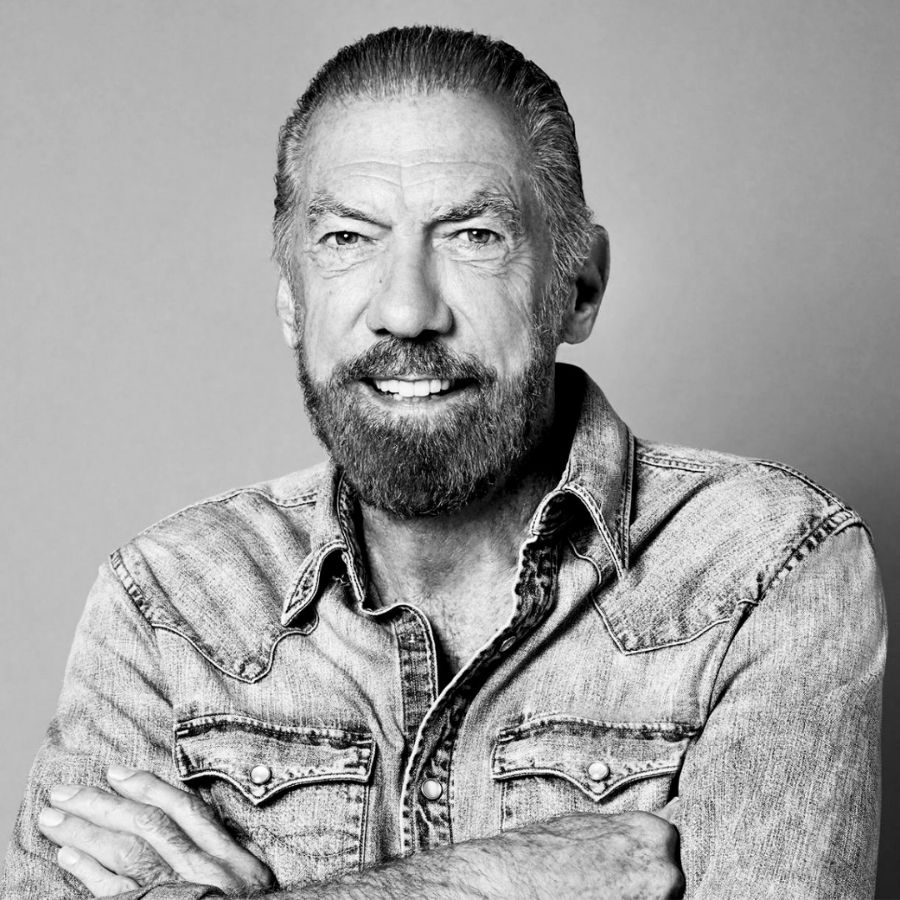
Some guests earn their success. John Paul DeJoria rebuilt his from scratch, twice. This is a man who slept in his car, fed himself on ninety-nine-cent breakfasts, and cashed in soda bottles at night just to keep his little boy fed. Then he built two of the most recognizable brands on the planet. Understanding who John Paul DeJoria is means understanding that where you start does not have to decide where you end up.
On his episode of The Bossticks, the conversation went deep on the stuff most business stories skip. The homelessness, the rejection, and the three jobs that fired him before he ever ran his own. What surfaces again and again is a mindset built on resilience, taking the very next step, giving back, and defining success as something far bigger than a bank balance. It’s a business playbook and a life playbook at the same time.
In this episode of the show, Lauryn and Michael sat down with the entrepreneur and philanthropist behind John Paul Mitchell Systems and Patrón to trace exactly how he went from difficult circumstances to iconic companies. You can watch the full John Paul DeJoria podcast episode as we hit the highlights below.
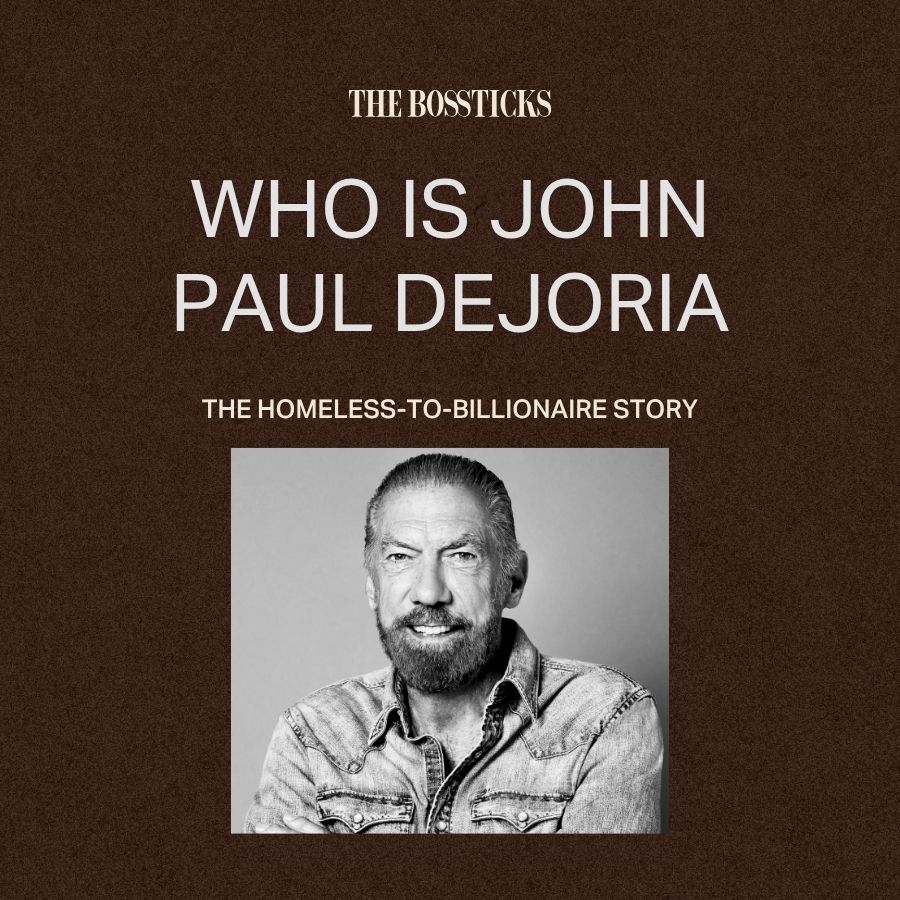
Who Is John Paul DeJoria?
If you’ve ever used a Paul Mitchell product or sipped a smooth tequila, you already know his work even if you didn’t know his name. John Paul Jones DeJoria was born on April 13, 1944, in Echo Park, Los Angeles, California.
Today he’s an entrepreneur, investor, and philanthropist whose story reads like the American dream in fast-forward. Here’s the short version, and it’s a wild one.
He started Paul Mitchell in 1980 with a $700 loan while living out of his car and selling shampoo door-to-door. Nine years later, he co-founded a tequila brand that would change the category entirely.
DeJoria explained on the show that he was actually homeless twice, first in his early twenties as a young single father, then again right as he was launching his hair care company. That second stretch overlapped with building the very brand that made him a billionaire. It’s the kind of detail that makes his advice land harder, because he isn’t theorizing. He lived it.
What Is John Paul DeJoria Famous For?
DeJoria is best known for turning two unlikely ideas into global brands and for a philosophy of success that puts purpose ahead of profit. Here’s what he’s built.
Co-Founding John Paul Mitchell Systems
The hair care company is the one that started it all. DeJoria connected with a hairdresser called Paul Mitchell and started a company called John Paul Mitchell Systems, which was only formed because DeJoria was able to secure a $700 loan.
He told Lauryn and Michael that Paul was one of the most avant-garde hairdressers around and a close friend of nine years, but Paul knew nothing about business. DeJoria could reformulate the products and run the company, so they split it down the middle and brought in an investor.
The scale today is almost hard to believe from those beginnings. John Paul’s company has become one of the most influential in the hair care industry, with revenue that tops $900 million per year.
His daughter now runs it globally, he shared, with products in well over a hundred countries.
Building Patrón Tequila
Nearly a decade after launching his hair care line, he went into spirits with zero industry experience and total conviction. In 1989, John co-founded the Patrón Spirits Company alongside his friend and business partner, Martin Crowley.
As he put it on the show, they knew nothing about the category but knew they had the best tequila in the world, and it became number one. That confidence paid off enormously. In January 2018, John sold Patrón to Bacardi for $5.1 billion.
A Philosophy of Reorders, Not Just Sales
The through-line between both companies is a rule DeJoria repeated more than once. Don’t get into the selling business, get into the reorder business. Make your product so good that people want to use it again and tell their friends about it. Word of mouth does the heavy lifting. It’s a lesson any founder building a consumable or subscription brand can borrow immediately, and it’s covered in his book, Success Unshared Is Failure.
From Homelessness to Building Businesses
DeJoria doesn’t hide the hard chapters. He walks straight into them, and he frames them as the training ground for everything that came after. At two separate times in his life, he was homeless and living out of his car. Here’s what he wants to share with listeners:
Early Twenties: A Note on the Floor
The first stretch came young. He married at twenty and had a baby, and one day he came home to a note, a pile of clothes, and his little son on the floor. His wife had left. There was no money and no car. To survive, he put his kid in a borrowed 1950 Cadillac with a blown water pump and collected soda bottles from vacant lots at night to cash in for a few cents each. An old friend eventually gave him a room, and he got back on his feet.
Launching Paul Mitchell: Homeless Again
The second time is the one most people never hear. Just as he was set to launch his company, his investor pulled out at the last minute. He’d already ordered bottles and artwork on thirty-day credit, so he scaled everything down to a tiny sample run and lived in his car for weeks.
The one-time door-to-door shampoo and encyclopedia salesman partnered with Paul Mitchell and pushed forward anyway.
He described surviving on about two dollars and fifty cents a day, a discount trucker breakfast in the morning, and free happy-hour appetizers in the afternoon. He also showered at Griffith Park. This is the reality behind the brand name, and it’s why his voice carries such weight when he talks about starting over.
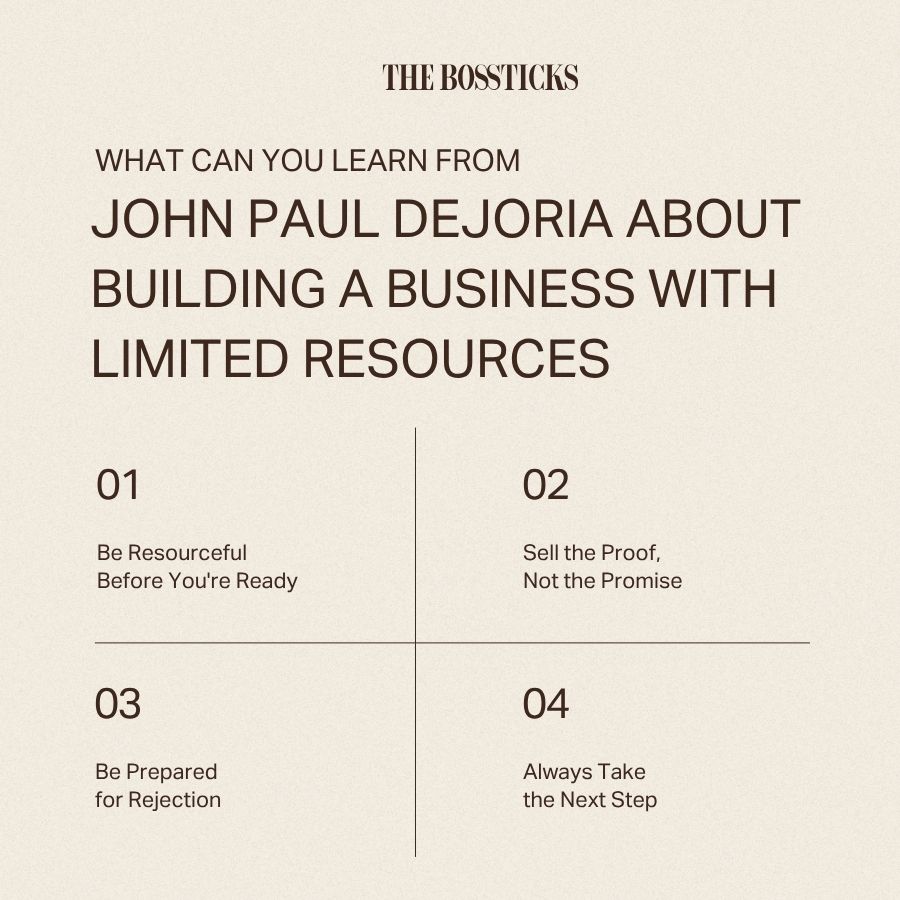
What Can You Learn From John Paul DeJoria About Building a Business With Limited Resources
This is where the episode turns into a genuine toolkit. DeJoria launched with almost nothing, so his lessons are built for people who don’t have capital, connections, or a safety net.
Be Resourceful Before You’re Ready
With his investor gone, DeJoria kept his suppliers in the dark and shrank his first order to a fraction of the plan. He talked a vendor down on artwork by handing over every last dollar he had, seven hundred bucks, and getting the deal done. His first “office” was a sixteen-dollar-a-year PO box, and a friend with a British accent recorded his answering machine message so the company seemed more official than it was at the time. The takeaway? Work with what you have, the rest will come.
Sell the Proof, Not the Promise
To win over the biggest distributor in the county, DeJoria went door to door to salons first and pre-sold twelve orders, leaving the customer name blank on each. When the distributor hesitated, he fanned out those twelve checks and said, “here are your first twelve customers, already sold.” It’s a masterclass in removing someone’s reason to say no.
Be Prepared for Rejection
His most durable lesson came from selling encyclopedias on commission only. “Be prepared for rejection,” he advises, and recalled the importance of staying just as enthusiastic on the next try, even after getting dozens of nos while selling encyclopedias door to door. Knock on door fifty-one with the same energy you brought to door one. If you expect rejection, it can’t knock you off course.
Always Take the Next Step
For anyone stuck in a survival chapter right now, his advice was simple and almost stubborn. You can’t change yesterday’s newspaper, so stop replaying it. Ask what your next step is, take it, then ask what the step above that is. That’s it. If this is landing for you, the show’s guide on how to start a side hustle is a natural next listen for turning that mindset into a first move.
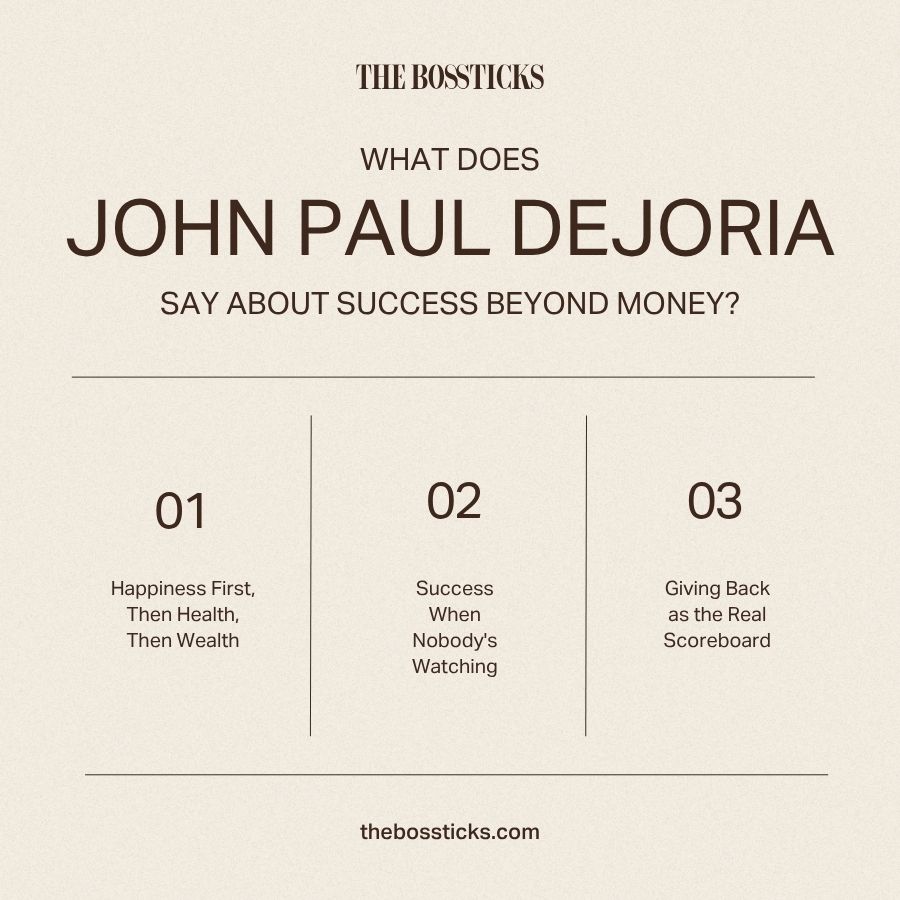
What Does John Paul DeJoria Say About Success Beyond Money?
For a self-made billionaire, DeJoria spends surprisingly little time talking about wealth. His real definition of success is measured in how far you’ve come and how many people you lift on the way.
Happiness First, Then Health, Then Wealth
He shared a story about one of the richest men of the 1950s who admitted, in a rare interview, that he’d trade most of his fortune to have simply been happy. DeJoria’s takeaway was blunt. Happiness comes first, and if you’re not happy, you won’t be healthy. Wealth is what comes after.
Success When Nobody’s Watching
As a teenager sweeping floors at a dry cleaner, he cleaned so thoroughly that his boss found no dust even under the cots. That earned him a raise and a lifelong lesson. Do the job right when no one is looking, and success finds you.
Giving Back as the Real Scoreboard
What DeJoria is proudest of isn’t the brands, it’s the impact. Through his foundation, he’s funded housing for homeless people in Austin, built wells for dozens of villages in Mali, and created skills centers so people can support themselves.
He’s also pledged to give away the majority of his wealth through JP’s Peace Love and Happiness Foundation. That’s the “unshared is failure” idea in action, and it’s the heart of his book.
What Does John Paul DeJoria Say About Family, Parenting, and Personal Values?
The final stretch of the conversation revealed a softer, funnier side of DeJoria, one shaped by a long marriage and a deliberate approach to raising kids who stay grounded.
Defining Rich for His Children
When his young son came home asking if the family was “real rich,” DeJoria redefined the word on the spot. Are we happy? Are we healthy? Then we’re rich. He and his wife share what the family does and gives, he explained, but not the dollar amounts, on purpose.
Not Spoiling the Next Generation
DeJoria has watched wealthy families spoil their children and regret it deeply. He and Michael traded honest thoughts on how kids handed everything can lose their sense of value and purpose. His answer was to make his children earn their way, and today his kids run companies and careers of their own. For parents thinking hard about this, the show’s conversation on raising emotionally strong kids pairs beautifully with DeJoria’s take.
The Secret to a Long Marriage
Asked for his marriage advice after decades together, DeJoria delivered the episode’s biggest laughs with a simple formula. Acknowledge that your partner is right, sit with it, then gently offer your opinion later. Being nice works, he said, even in business, even with jerks. It’s a small idea that quietly protects a relationship from the little resentments that chip away over time.
Where to Watch the Full John Paul DeJoria Conversation
DeJoria’s story proves that resourcefulness beats resources, that rejection is just part of the deal, and that real success is measured in the lives you improve. From door to door shampoo sales to Patrón tequila, from a note on the floor to Paul Dejoria becoming a household name in hair care, his journey is the ultimate reminder that passion still works if you keep taking the next step.
Watch the full episode on The Bossticks YouTube and subscribe while you’re there so you never miss a conversation like this one. If DeJoria’s habits and rituals have you thinking about your own daily routine.
Lauryn and Michael aren’t doctors, financial advisors, or business consultants, and nothing here is professional advice. This is a conversation with an inspiring guest, shared because it’s worth hearing. Always do your own research and talk to a qualified professional before making big money, health, or life decisions.