

Juliet Warner’s story is one you have to hear for yourself. She sat down on The Bossticks to share her journey to sobriety, and she doesn’t hold back. She gets honest about her addiction, her relapses, and the life she has built on the other side of it. And honestly, it’s one of the most inspiring conversations we’ve heard in a while.
Juliet talks about it all: the years she spent chasing a feeling, the mother who tried to save her, the babies who eventually gave her a reason, and the very real work of getting sober and staying that way. Lauryn has also been open about the way drug and alcohol addiction has touched her own family, which makes this conversation especially personal.
So, whether in recovery yourself, love someone struggling with addiction, or just need a reminder of how much life can change, this one is worth your time. If you want to hear the full conversation, you can watch it right below.
Who Is Juliet Warner?
Juliet Warner is a mother of four and a woman in long-term recovery who openly shares her experience with addiction and sobriety. Lauryn and Michael found her the way a lot of people do these days: online. Lauryn discovered Juliet through Caroline Stanbury’s podcast, watched some clips, and was blown away by how resilient and honest she was. The two randomly ran into each other in St. Barts, which led to her appearance on The Bossticks.
One thing Juliet wants to make clear is that her addiction didn’t start with a traumatic childhood. In fact, she says if you looked at her childhood from the outside, she had everything any kid would want: two amazing parents and two younger sisters, neither of whom went down the road she did.
But even with a beautiful childhood, Juliet remembers feeling lonely. She also says she “never had an off switch.” There was never one point where she thought, “Maybe I should drink less,” or “Maybe I shouldn’t drink at all.” For Juliet, addiction was about trying to fill a hole. And as she explains in the episode, it took her years to understand what she was actually searching for.
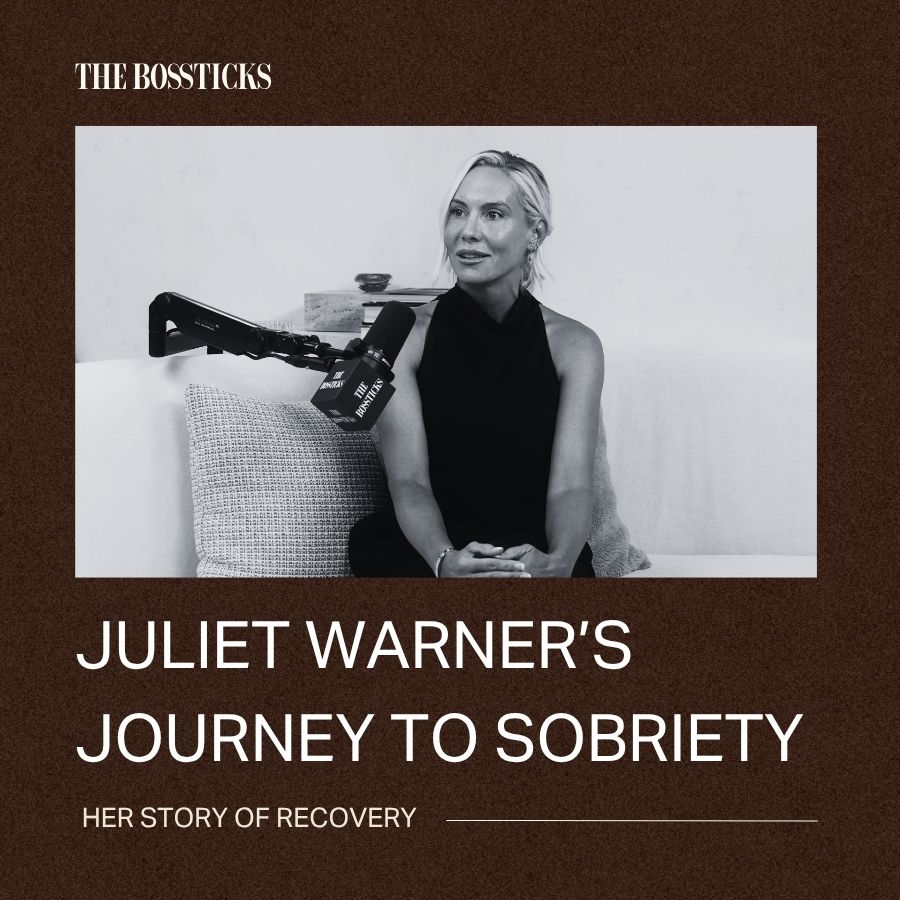
Juliet Warner’s Journey to Sobriety
Juliet’s experience with drugs and alcohol started young. She recalled going to a party the first weekend of high school, where drugs and alcohol were already part of the picture. By her telling, she was always the first one to start and the last one to finish. Then, she found opiates. She said from the first time she tried one, it was “the love of her life.” She knew opiates were different for her, and her addiction quickly became more serious.
Eventually, OxyContin got too expensive to keep up with. Juliet described a night on spring break when a friend told her she only needed $10. That night, at 19 years old, she bought her first bag of heroin at nineteen.
Her parents, she’s quick to say, were doing their best to help her. She talked about her mom going through her purse, throwing away drugs, and sometimes even paying her debts to drug dealers. But according to Juliet, none of it worked. Instead, she says it only perpetuated the cycle.
Now that Juliet’s a mom herself, she understands her mother in a completely different way and what she went through. She talked about the difference between loving someone with an addiction, which she called one of the most excruciatingly painful things a person can experience, and participating in the disease.
The Turning Point in Her Recovery
Getting sober didn’t happen all at once for Juliet. It took many, many tries. She described the next seven or eight years as a cycle of relapse, remorse, and recovery, over and over again. Sometimes she would stay sober three weeks and sometimes she’d make it seven months before the cravings returned.
Things started to change during a stay at a treatment center in Miami Beach. Juliet called her longtime sponsor, who told her she was a “ticking time bomb.” Her sponsor told her she had been around the twelve steps of Alcoholics Anonymous for far too long without ever actually working through them. So, they started right then.
Juliet described part of working through the twelve steps as writing a moral inventory of her life: everyone she was mad at, everything wrong she had ever done, and all her fears. By the time her thirty days in treatment were up, she had finished it.
From there, she moved into a sober house for the first time, something she says she had never been willing to do before. And here’s the crazy part: Juliet was happy. She said the sober house was in a bad neighborhood and didn’t even have a floor, just concrete with some rugs thrown down. Even with that, she remembers being probably the happiest she had ever been in her entire life.
For the first time, Juliet was doing things differently. And it was working.
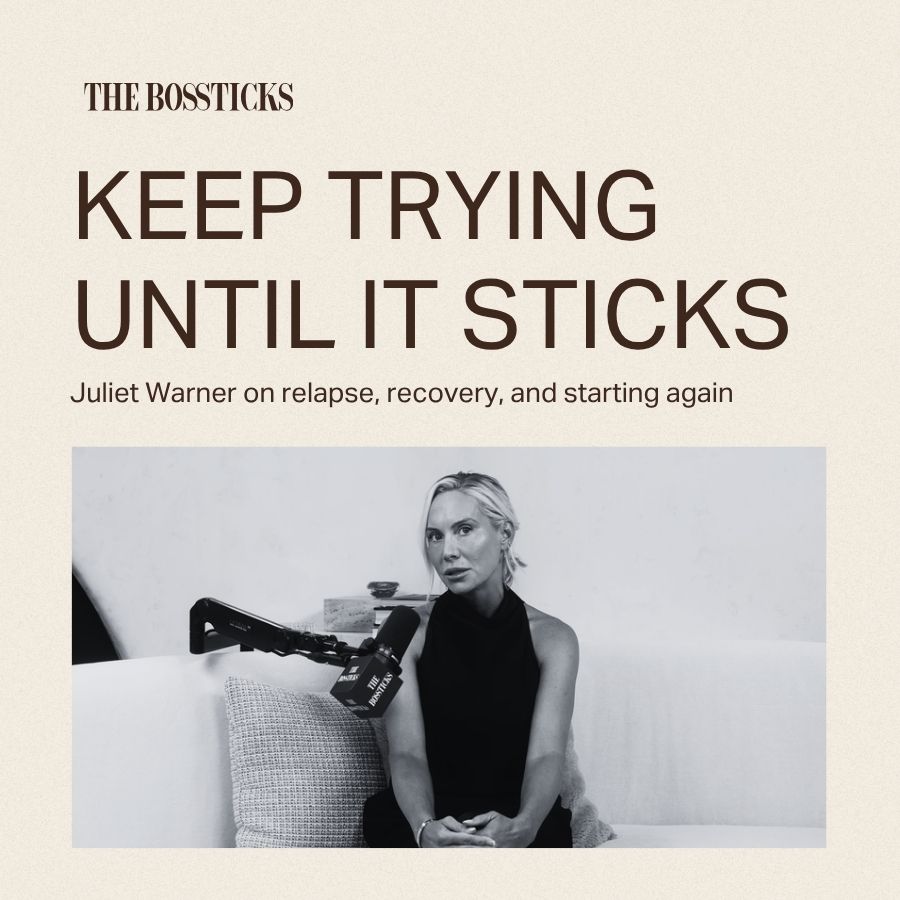
What Sobriety Looks Like for Juliet Today
After getting sober, Juliet’s life changed fast. She met the man who is now her husband, Alex, and she joked that, “like the good addict she is,” she had four kids in four years, all roughly fifteen months apart. For Juliet, becoming a mom is honestly what changed everything. She says the moment she had children, her whole life finally made sense.
Years later, Juliet stopped doing the things that had helped her stay sober. When all four kids went to school, she struggled with the transition. She wasn’t surrounding herself with sober people anymore, and started thinking maybe alcohol couldn’t hurt her. She called herself an “atypical alcoholic.” For her, it meant she could go months having an occasional drink without a problem until she couldn’t. Eventually, she would drink too much and completely black out.
Everything changed during a family trip to the Bahamas. Juliet had planned to stay sober, but says she became restless and irritable. She ordered a strong drink, and her mother’s helper eventually called Alex, who chartered a plane to come get them.
She hasn’t had a drink since.
Today, Juliet is back doing the work, and she talks openly about addiction and recovery with her family. She said she’s actually grateful her kids saw her during that relapse. It gave her the chance to be vulnerable with them and admit she messed up.
The Lessons and Hope in Juliet’s Story
For anyone struggling with addiction, Juliet’s message is simple: keep trying. She says it isn’t about how many times you mess up, it’s about how many times you get back on your feet. Because if you keep trying, you never know which time is going to be the one that clicks.
And there’s another side of addiction that Juliet wants to talk about: the people who love someone struggling with it. Lauryn talked about wanting to step in, take control, and plan interventions. Juliet understands that instinct, but says families need support, too.
Juliet also wants to change the way people picture addiction. She believes there’s an image problem with addiction in this country, the assumption that someone with an addiction has to look a certain way or come from a certain background. Her own story shows just how different addiction can look.
That’s also why Juliet talks about her experience so openly. For her, being open takes the shame away, while shame grows when you hide it.
You can mess up, you can start again, and, according to Juliet, you can keep doing that until one day, it sticks.
Listen to Juliet Warner’s Full Story
There’s so much more in the full conversation than any recap can hold. It’s honest, funny in places you wouldn’t expect, and most importantly, genuinely hopeful.
Watch the entire episode on the show and hear Juliet Warner’s recovery story in her own words, then subscribe on The Bossticks YouTube channel so you never miss a conversation like this one. For more stories about resilience and rebuilding, the Busy Philipps episode on The Bossticks is another one worth your time.
One important note: If you or someone you love is struggling with addiction, support is available right now. You can contact SAMHSA’s National Helpline at 1-800-662-4357, a free, confidential, 24/7 service, and you can learn more at SAMHSA’s National Helpline resource page. Reaching out is not a last resort. Sometimes, as Juliet’s story shows, it is the first step toward the life waiting on the other side.
The team behind the show are not doctors or addiction specialists, and nothing here is medical advice. This is Juliet’s personal experience, shared to inform and encourage. If you are dealing with addiction or a mental health concern, please talk to a qualified professional, and if you are in crisis, text or call 988 to reach the Suicide and Crisis Lifeline.